
Emergency note: Water, sewage, and storm damage can involve electrical, structural, and contamination hazards. Keep people out of unsafe areas and call qualified help. Eco Water Restoration is available 24/7 at (253) 204-3646. |
A dishwasher leak may begin as a few ounces of water at the door, supply connection, pump, or drain line. The visible amount can look minor even while repeated cycles send moisture under cabinets and across the kitchen subfloor.
For a property owner searching for water damage restoration Bellevue WA, the key is to think beyond the visible water or staining. Restoration is a building-science process: stop the source, understand contamination, map the full moisture boundary, remove what cannot be restored, and verify drying before repairs cover the area again.
Bellevue kitchens often feature continuous hardwood or luxury vinyl flooring, built-in cabinetry, islands, and finished lower levels. Those design choices can hide the migration path and increase the number of materials affected by a leak.


How Slow Or Sudden Dishwasher Leak Spreads Beyond the First Wet Area
Water follows gravity, capillary action, seams, and penetrations. It can move sideways beneath finishes before it moves down, and it can wick upward into drywall, trim, and cabinet material. That is why the edge of the visible puddle is not a reliable boundary for the restoration scope.
Common migration routes in this type of Bellevue, WA loss include:
- under the dishwasher where the toe kick hides the first signs
- behind adjacent base cabinets and under cabinet end panels
- beneath continuous flooring that extends through the kitchen
- into the subfloor around plumbing and electrical penetrations
- down to a finished ceiling, basement, or garage below
What to Do Immediately
Safety and source control come before cleanup. The correct first steps depend on electrical conditions, structural stability, and whether the water may be contaminated. Do not enter an unsafe area simply to save belongings.
Use this response checklist:
- Cancel the cycle and close the dishwasher water supply valve.
- Disconnect power only when it can be done without entering wet conditions.
- Do not pull the appliance out if the floor is buckled or electrical connections are wet.
- Photograph water, staining, swollen cabinet edges, and the appliance connection.
- Remove contents from nearby lower cabinets and place them in a dry area.
- Arrange moisture testing when the leak repeated, reached cabinets, or appeared below the kitchen.
What May Be Wet Even When It Looks Normal
Many building materials hide moisture. Paint, finish coatings, flooring, cabinets, and trim can look normal while the material behind or beneath them remains elevated. Professional inspection uses both visual evidence and instruments to decide where further access is justified.
Materials that commonly require separate evaluation include:
- cabinet toe kicks and side panels
- engineered wood or hardwood flooring
- floor underlayment and subfloor
- drywall behind cabinets
- island bases and nearby millwork
- finished ceiling and insulation below
What Professional Water Damage Restoration Bellevue Wa Should Include
A complete response is more than placing equipment in the room. The restoration plan should connect the source, contamination level, material construction, drying goals, and repair sequence. Eco Water Restoration describes a documented process that includes investigation, protection, selective demolition when necessary, equipment setup, monitoring, and final moisture verification.
A well-managed project generally includes these steps:
- inspect the appliance bay and adjacent cabinets without causing unnecessary damage
- map moisture beneath flooring and along cabinet bases
- remove standing water and isolate the work area
- use targeted drying methods where assemblies remain structurally sound
- detach toe kicks or limited trim when needed for airflow
- monitor cabinets, subfloor, and walls separately because they dry at different rates
- document material conditions and any required removal
- confirm dry conditions before cabinet, floor, or paint repairs begin
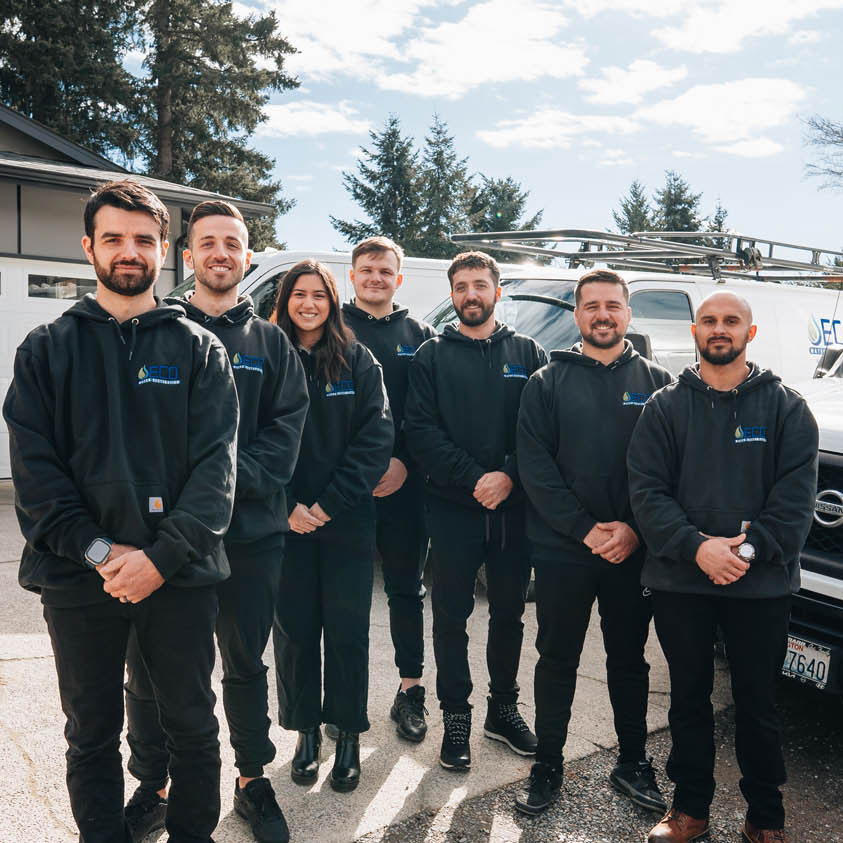
Eco Water Restoration’s local team supports property owners through assessment, drying, documentation, and recovery. Image source
Can Materials Be Saved?
Solid wood components may tolerate careful drying better than particleboard and medium-density fiberboard. Flooring salvage depends on water duration, construction, finish, and whether moisture is trapped beneath it. The decision should follow measurements, not a blanket rule that every wet material must be removed.
The best salvage decision is made early and revisited as measurements change. Removing everything can create unnecessary rebuild cost, while keeping a material that cannot be cleaned or dried can create odor, mold, delamination, or structural problems later. A written explanation of each removal decision helps the property owner and insurer understand the scope.
Insurance and Documentation
Take photos before moving or discarding items when it is safe to do so. Record the discovery time, source-control actions, emergency calls, and rooms affected. Save receipts for emergency protection and temporary expenses. Professional moisture maps, equipment logs, demolition photos, and final drying records can help explain why the work was necessary.
Insurance coverage depends on the policy and cause of loss. Sudden plumbing discharge may be treated differently from groundwater, flooding, sewage backup, or a long-term leak. Restoration contractors document the physical damage, but coverage decisions belong to the insurer. Ask clear questions and keep copies of every communication.
How to Reduce the Chance of a Repeat Loss
Prevention should address the actual failure mechanism rather than the most visible symptom. After restoration, review these practical steps:
- Inspect the supply line, drain hose, and door gasket for wear.
- Use the correct detergent and avoid overfilling.
- Run the dishwasher while someone is home.
- Place a leak sensor beneath the sink or dishwasher where practical.
- Investigate repeated musty odor, warped toe kicks, or darkened flooring immediately.
Why Local Response Matters in Bellevue, WA
Fast response limits migration, but speed alone is not enough. The crew must protect unaffected areas, use the right safety controls, explain the scope, and measure progress. A local team familiar with Bellevue, WA housing and commercial construction can also coordinate access, trades, and insurance documentation without relying on a distant call center.
Eco Water Restoration provides 24/7 response, water extraction, structural drying, mold-related services, and insurance documentation support throughout the Greater Seattle area. For urgent help, contact the team as soon as the area is safe.
Learn more about Bellevue water-damage service page, review the water-damage restoration services, or contact Eco Water Restoration.
Common Mistakes That Can Increase the Damage
Water losses become more expensive when visible cleanup is mistaken for complete restoration. A property may look improved after towels, a shop vacuum, or a few fans are used, while moisture remains in materials that cannot be seen. The safest approach is to stabilize the source, document the loss, and make decisions from measurements rather than assumptions.
- Waiting for a stain, odor, or floor movement to become worse before requesting an inspection.
- Using uncontrolled heat, which may dry the surface too quickly while moisture remains deeper in the assembly.
- Removing flooring, cabinets, or drywall before documenting the condition and defining the moisture boundary.
- Running fans in an area affected by sewage, mold, or uncertain contamination before containment is established.
- Turning off dehumidifiers because the room feels comfortable or the visible surface looks dry.
- Beginning paint, flooring, or cabinet repairs before final moisture readings are recorded.
Another common mistake is assuming that insurance documentation can be reconstructed later. Capture the source, the overall rooms, close-up material damage, and each stage of necessary removal. Keep a simple timeline and save every invoice, report, and receipt. Organized records make communication easier even when coverage questions are still being reviewed.
Questions to Ask the Restoration Team
A clear scope should be understandable to the property owner. Before work progresses, ask the project manager to explain how safety, contamination, drying, and documentation will be handled. The answers should connect each action to a measured condition in the building rather than relying on a one-size-fits-all package.
- What caused the loss, and has the source been fully stopped or only temporarily stabilized?
- How was the affected moisture boundary identified, including rooms or levels without visible water?
- What materials can be dried in place, what must be removed, and why?
- How will unaffected areas be protected from dust, contamination, and equipment traffic?
- Which moisture readings will be repeated, and what dry standard will determine completion?
- What photos, estimates, equipment logs, and final reports will be provided for the project file?
Good communication also includes changes. If hidden damage is found, the team should photograph it, explain how it affects the scope, and identify any new trade or insurance coordination that is needed. Property owners should know who their primary contact is and when to expect progress updates.
Bellevue, WA Property-Owner Checklist
- Confirm the source has been stopped or stabilized.
- Keep people away from electrical, structural, and contaminated hazards.
- Photograph the source, affected rooms, and belongings.
- Ask how the full moisture boundary will be measured.
- Request an explanation for any material removal.
- Keep daily drying records and insurer communications together.
- Do not begin finish repairs until drying is verified.
- Correct the original plumbing, drainage, roof, ventilation, or equipment issue.
Frequently Asked Questions
Can a dishwasher leak damage cabinets without leaving a puddle?
Yes. Water can remain behind the toe kick or wick into cabinet panels, where swelling and discoloration may appear after the surface spill is gone.
Should wet kitchen flooring always be removed?
No. The decision depends on the flooring system, moisture beneath it, contamination, and its response to controlled drying.
Why does the room below show damage first?
Water follows penetrations and subfloor seams. A ceiling stain below may appear while the kitchen surface still looks nearly normal.
What should I photograph for a claim?
Capture the appliance, connection or suspected source, overall room, close-ups of affected materials, lower-level damage, and any items moved or discarded.
Need water damage restoration Bellevue WA?
When a property has been affected by slow or sudden dishwasher leak, early action and measured drying can limit the size of the repair. Eco Water Restoration provides water damage restoration Bellevue WA support with moisture assessment, extraction, cleaning, structural drying, documentation, and restoration coordination. Call (253) 204-3646 or use the online contact form for immediate assistance.
External Sources
These resources provide general safety, mold, flood, and insurance guidance. Project-specific decisions should be based on the property conditions and applicable policy terms.
- EPA: A Brief Guide to Mold, Moisture and Your Home
- CDC: Dry Off Wet Items After a Storm
- Washington OIC: Filing a Homeowner Insurance Claim

As co-owner of Eco Water Restoration, Ivan plays an active role in the company’s water, flood, storm, sewage, and mold damage restoration services, ensuring every job is done right the first time. The company offers free estimates and focuses on returning properties to their pre-damage condition with precision and attention to detail. Ivan works directly with insurance companies to minimize out-of-pocket expenses for clients, helping to streamline the claims process and reduce stress.
Ivan's personal involvement and dedication to customer satisfaction are frequently mentioned in reviews, with clients highlighting his professionalism, responsiveness, and commitment to quality. Many customers specifically praise Ivan for his hands-on approach and for going the extra mile to ensure their needs are met.
For water, flood, storm, sewage, or mold damage restoration, Ivan Mukomol and his team provide exceptional service and care. With free estimates, a focus on reducing expenses, and a strong commitment to restoring properties to their pre-damage state, you can trust Ivan to ensure a smooth and efficient restoration process from start to finish.
- Fire Sprinkler Water Damage in Bellevue: A Commercial Property Manager’s Recovery Checklist - October 15, 2026
- Water Damage in Seattle Condos: What to Do When a Leak Spreads Between Units - October 12, 2026
- Mold Behind Kitchen Cabinets: Why Slow Plumbing Leaks Are Easy to Miss in Kirkland Homes - September 28, 2026